Kontrapunkt

Justyna Gotkowska (@jgotkowska)

Konta (64)

Dziś, 12 listopada

Justyna Gotkowska @jgotkowska · Analityczka bezpieczeństwa, OSW
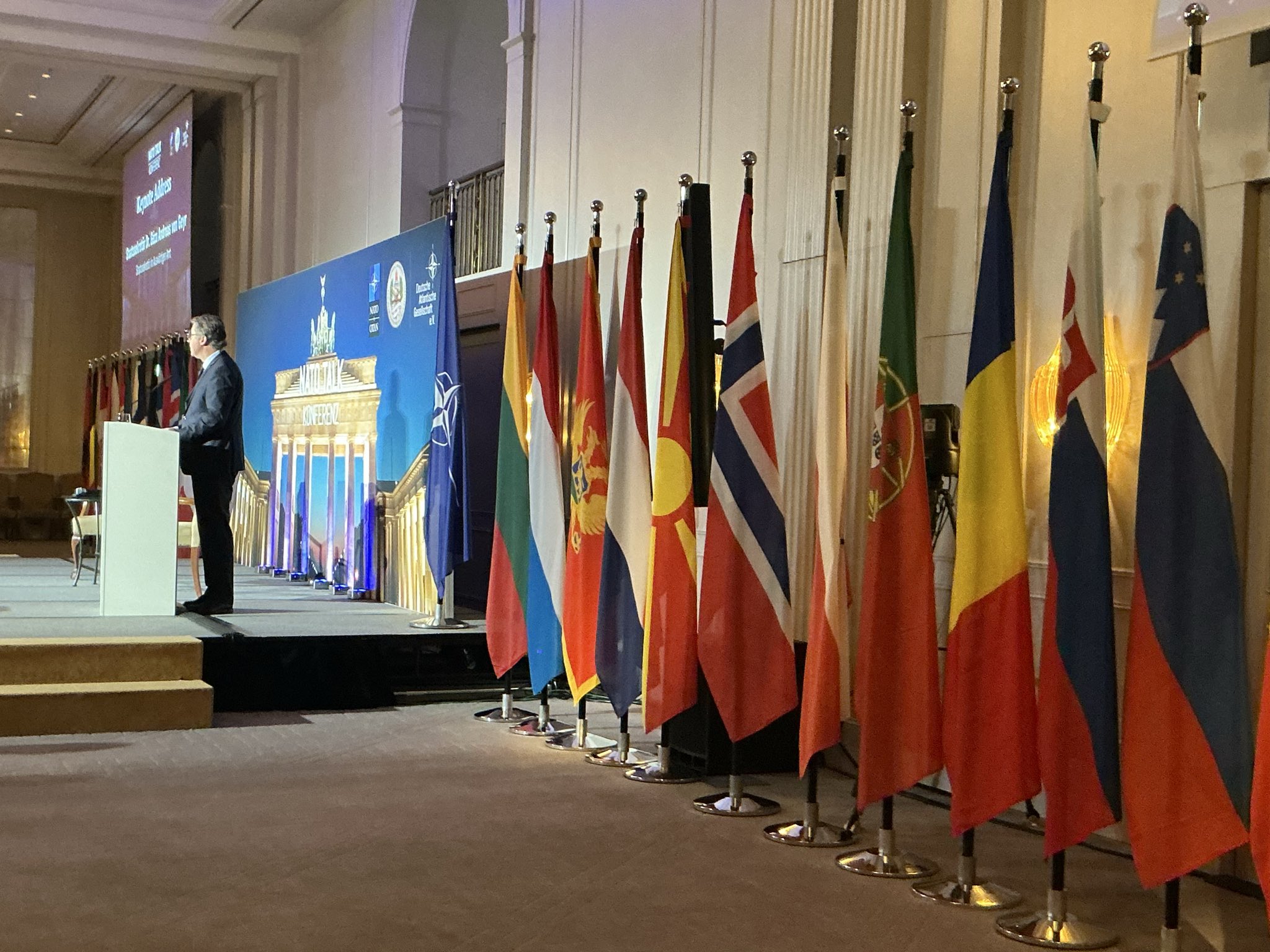
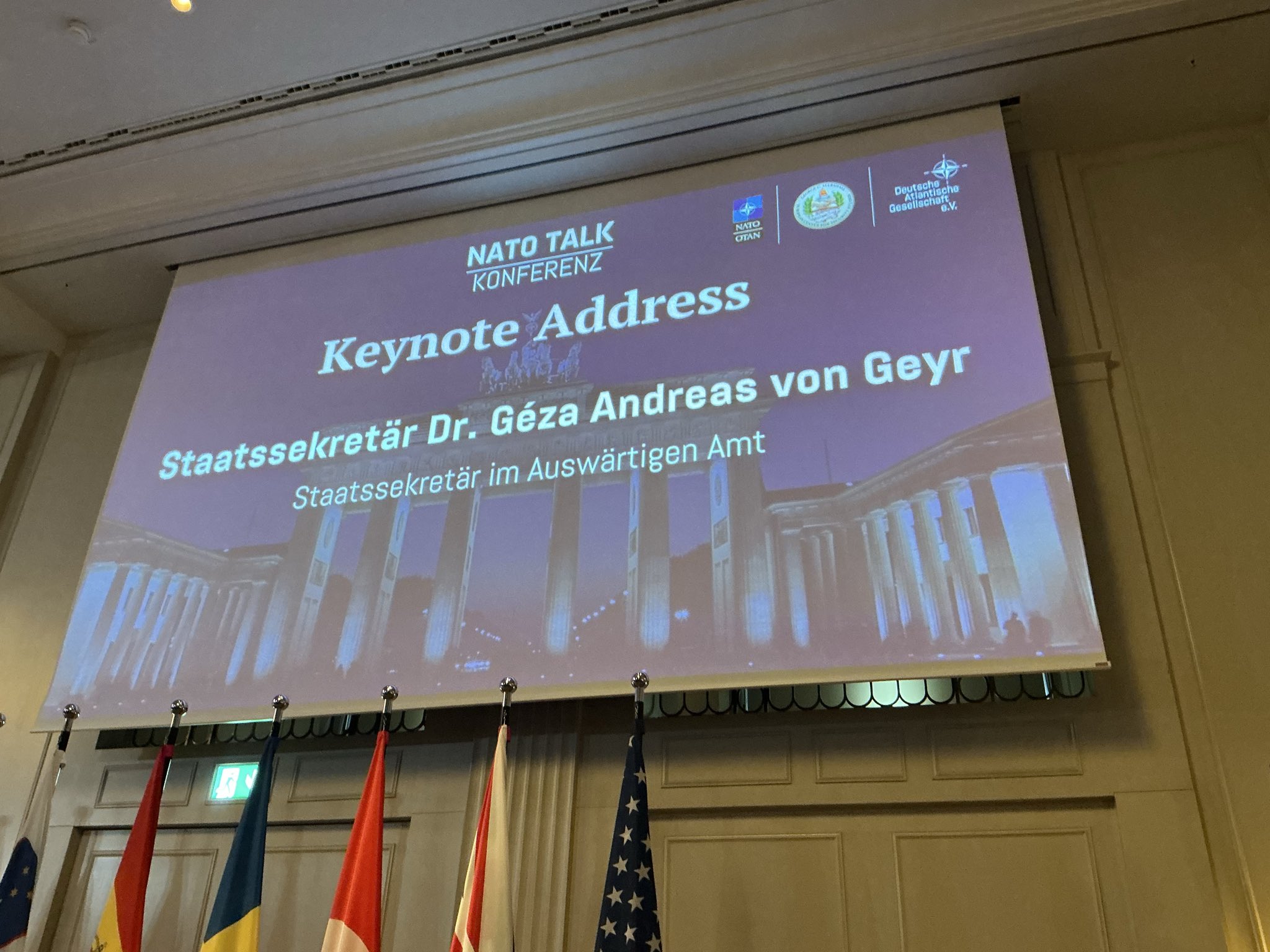
Secretary of State in the German MFA, Géza Andreas von Geyr during #NATOTalk Conference in Berlin: We do not need a “new security architecture” as Jared Kushner mentioned it after the talks in Abu Dhabi. I am not sure what the U.S. representatives understand under this notion, but I know what Russia does: domination in Europe and veto rights over alliances.
Zdjęcie dołączone do wpisuZdjęcie dołączone do wpisu
Justyna Gotkowska @jgotkowska · Analityczka bezpieczeństwa, OSW
As I write below 👇, a dangerous process begins aiming at luring Europe into talks on far more than ending the 🇷🇺🇺🇦 war: “The U.S. has asked Russia to submit a new proposal for a future security agreement with Europe that includes Russian steps to ease tension with the continent, two sources with knowledge of the matter said.” axios.com/2026/11/11/russia-… Link Scoop: U.S. asks Russia to propose new security agreement with Europe European countries doubt Russia would honor any deal. axios.com Justyna Gotkowska (@jgotkowska) Not much has been achieved in Abu Dhabi, but the framing of the talks has nevertheless been harmful, particularly for the Europeans. The Russians have achieved their goal of opening a discussion about the post-war European security order, which Kushner and Witkoff were ready to embrace. 1. The U.S. – clearly Kushner and Witkoff, with Trump’s blessing – wants to bring about not only peace for peace’s sake, but also an opening for business deals with Russia. They probably want a credible excuse for opening a business track with Russia. After the midterms, securing business opportunities for family members and friends might be one of their goals. And here Europe might be an obstacle to remove – EU sanctions will prevent the launch of some envisaged U.S.-Russian business ventures, such as gas deliveries to Europe. It is probably beyond Kushner and Witkoff’s comprehension what Putin really wants. They do not understand Russian thinking or the implications of concessions to Moscow for European security. They have no understanding of Russia’s goals and policies towards NATO, the EU and within the OSCE, either now or in the past. Kushner during the press conference: “Something is clearly not working…”. They say they want to preserve existing institutions and make NATO stronger, at the same time as Russia wants to undermine them. It is good that Gen. Grynkewich took part in the talks, providing a link to the realities on the ground. And these realities include – according to the Polish Defence Minister – the Pentagon agreeing today to station troops permanently in Poland and not objecting to Poland acquiring land-based Tomahawk missiles. 2. The Europeans – are being drawn into a tricky game. Ukraine wants Europe on board in order to secure European backing in its difficult talks with the U.S. Europe wants to know what the U.S. is discussing with Russia regarding the end of the war and post-war Ukraine, and for all the right reasons. The problem is that both Russia and Kushner/Witkoff have just sprung a trap by opening up discussions on post-war European security with the Europeans. And this trap carries two major risks. First, it broadens the scope of the discourse. Once the topic has been opened and the Europeans have been drawn in, Russia and the U.S. will push Europe further towards engaging in these talks, with an unpredictable outcome. Second, Europe has the problem of not being a single entity, of having differing perspectives and representatives, some of whom – in the race to “represent Europe” – might be more willing to go beyond previously agreed common positions. All in all, I hope there is enough sense within the E4, EU and NATO to understand where this is heading, as Russia is unlikely to shift its positions. — nitter.jaydenha.uk/jgotkowska/status/2120588494120653046#m

Justyna Gotkowska @jgotkowska

Not much has been achieved in Abu Dhabi, but the framing of the talks has nevertheless been harmful, particularly for the Europeans. The Russians have achieved their goal of opening a discussion about the post-war European security order, which Kushner and Witkoff were ready to embrace. 1. The U.S. – clearly Kushner and Witkoff, with Trump’s blessing – wants to bring about not only peace for peace’s sake, but also an opening for business deals with Russia. They probably want a credible excuse for opening a business track with Russia. After the midterms, securing business opportunities for family members and friends might be one of their goals. And here Europe might be an obstacle to remove – EU sanctions will prevent the launch of some envisaged U.S.-Russian business ventures, such as gas deliveries to Europe. It is probably beyond Kushner and Witkoff’s comprehension what Putin really wants. They do not understand Russian thinking or the implications of concessions to Moscow for European security. They have no understanding of Russia’s goals and policies towards NATO, the EU and within the OSCE, either now or in the past. Kushner during the press conference: “Something is clearly not working…”. They say they want to preserve existing institutions and make NATO stronger, at the same time as Russia wants to undermine them. It is good that Gen. Grynkewich took part in the talks, providing a link to the realities on the ground. And these realities include – according to the Polish Defence Minister – the Pentagon agreeing today to station troops permanently in Poland and not objecting to Poland acquiring land-based Tomahawk missiles. 2. The Europeans – are being drawn into a tricky game. Ukraine wants Europe on board in order to secure European backing in its difficult talks with the U.S. Europe wants to know what the U.S. is discussing with Russia regarding the end of the war and post-war Ukraine, and for all the right reasons. The problem is that both Russia and Kushner/Witkoff have just sprung a trap by opening up discussions on post-war European security with the Europeans. And this trap carries two major risks. First, it broadens the scope of the discourse. Once the topic has been opened and the Europeans have been drawn in, Russia and the U.S. will push Europe further towards engaging in these talks, with an unpredictable outcome. Second, Europe has the problem of not being a single entity, of having differing perspectives and representatives, some of whom – in the race to “represent Europe” – might be more willing to go beyond previously agreed common positions. All in all, I hope there is enough sense within the E4, EU and NATO to understand where this is heading, as Russia is unlikely to shift its positions.

Cytowany wpis ↗

Wczoraj, 11 listopada

Justyna Gotkowska @jgotkowska · Analityczka bezpieczeństwa, OSW
Cieszy wpis portugalskiego MSZ o tym, że nie jest tak, że ze względu na odległość od Moskwy, Portugalia inaczej postrzega rosyjskie zagrożenie dla Europy 🙃 MNE Portugal (@mne_pt) The @SecGenNATO Mark Rutte should know better than to overlook the countries and governments that stand firmly by Ukraine and fully understand the threat posed by Russia. Portugal, its Government and its people have never been in any doubt about which side of history they stand on. It is regrettable that the NATO Secretary General should speak so lightly on such a serious matter. — nitter.jaydenha.uk/mne_pt/status/2120153833980448822#m

Cytowany wpis ↗

Justyna Gotkowska @jgotkowska · Analityczka bezpieczeństwa, OSW
Russian campaign on how to divide Europeans in full swing: "And the third option he presented were bilateral mutual non-aggression pacts. For example, agreements ⁠of this kind could be reached, among other things, with individual NATO member states, which would then receive, for instance, additional individual security guarantees from the ⁠Russian Federation” reuters.com/world/europe/rus… Link Russian diplomat says Moscow could conclude non-aggression pacts with NATO member states A senior Russian diplomat said on Wednesday that Moscow could conclude non-aggression pacts with NATO member states as part ​of a new security architecture for Europe being discussed ‌as part of the... reuters.com Justyna Gotkowska (@jgotkowska) Not much has been achieved in Abu Dhabi, but the framing of the talks has nevertheless been harmful, particularly for the Europeans. The Russians have achieved their goal of opening a discussion about the post-war European security order, which Kushner and Witkoff were ready to embrace. 1. The U.S. – clearly Kushner and Witkoff, with Trump’s blessing – wants to bring about not only peace for peace’s sake, but also an opening for business deals with Russia. They probably want a credible excuse for opening a business track with Russia. After the midterms, securing business opportunities for family members and friends might be one of their goals. And here Europe might be an obstacle to remove – EU sanctions will prevent the launch of some envisaged U.S.-Russian business ventures, such as gas deliveries to Europe. It is probably beyond Kushner and Witkoff’s comprehension what Putin really wants. They do not understand Russian thinking or the implications of concessions to Moscow for European security. They have no understanding of Russia’s goals and policies towards NATO, the EU and within the OSCE, either now or in the past. Kushner during the press conference: “Something is clearly not working…”. They say they want to preserve existing institutions and make NATO stronger, at the same time as Russia wants to undermine them. It is good that Gen. Grynkewich took part in the talks, providing a link to the realities on the ground. And these realities include – according to the Polish Defence Minister – the Pentagon agreeing today to station troops permanently in Poland and not objecting to Poland acquiring land-based Tomahawk missiles. 2. The Europeans – are being drawn into a tricky game. Ukraine wants Europe on board in order to secure European backing in its difficult talks with the U.S. Europe wants to know what the U.S. is discussing with Russia regarding the end of the war and post-war Ukraine, and for all the right reasons. The problem is that both Russia and Kushner/Witkoff have just sprung a trap by opening up discussions on post-war European security with the Europeans. And this trap carries two major risks. First, it broadens the scope of the discourse. Once the topic has been opened and the Europeans have been drawn in, Russia and the U.S. will push Europe further towards engaging in these talks, with an unpredictable outcome. Second, Europe has the problem of not being a single entity, of having differing perspectives and representatives, some of whom – in the race to “represent Europe” – might be more willing to go beyond previously agreed common positions. All in all, I hope there is enough sense within the E4, EU and NATO to understand where this is heading, as Russia is unlikely to shift its positions. — nitter.jaydenha.uk/jgotkowska/status/2120588494120653046#m

Justyna Gotkowska @jgotkowska

Not much has been achieved in Abu Dhabi, but the framing of the talks has nevertheless been harmful, particularly for the Europeans. The Russians have achieved their goal of opening a discussion about the post-war European security order, which Kushner and Witkoff were ready to embrace. 1. The U.S. – clearly Kushner and Witkoff, with Trump’s blessing – wants to bring about not only peace for peace’s sake, but also an opening for business deals with Russia. They probably want a credible excuse for opening a business track with Russia. After the midterms, securing business opportunities for family members and friends might be one of their goals. And here Europe might be an obstacle to remove – EU sanctions will prevent the launch of some envisaged U.S.-Russian business ventures, such as gas deliveries to Europe. It is probably beyond Kushner and Witkoff’s comprehension what Putin really wants. They do not understand Russian thinking or the implications of concessions to Moscow for European security. They have no understanding of Russia’s goals and policies towards NATO, the EU and within the OSCE, either now or in the past. Kushner during the press conference: “Something is clearly not working…”. They say they want to preserve existing institutions and make NATO stronger, at the same time as Russia wants to undermine them. It is good that Gen. Grynkewich took part in the talks, providing a link to the realities on the ground. And these realities include – according to the Polish Defence Minister – the Pentagon agreeing today to station troops permanently in Poland and not objecting to Poland acquiring land-based Tomahawk missiles. 2. The Europeans – are being drawn into a tricky game. Ukraine wants Europe on board in order to secure European backing in its difficult talks with the U.S. Europe wants to know what the U.S. is discussing with Russia regarding the end of the war and post-war Ukraine, and for all the right reasons. The problem is that both Russia and Kushner/Witkoff have just sprung a trap by opening up discussions on post-war European security with the Europeans. And this trap carries two major risks. First, it broadens the scope of the discourse. Once the topic has been opened and the Europeans have been drawn in, Russia and the U.S. will push Europe further towards engaging in these talks, with an unpredictable outcome. Second, Europe has the problem of not being a single entity, of having differing perspectives and representatives, some of whom – in the race to “represent Europe” – might be more willing to go beyond previously agreed common positions. All in all, I hope there is enough sense within the E4, EU and NATO to understand where this is heading, as Russia is unlikely to shift its positions.

Cytowany wpis ↗
Justyna Gotkowska @jgotkowska · Analityczka bezpieczeństwa, OSW

Odpowiedź w wątku

Quite important in the above context what @vonderburchard writes: “According to Merz’s spokesperson, Kornelius, the Europeans and the United States have “agreed on four principles” in Abu Dhabi (although not yet with Russia): “First, on sequencing: the sequencing envisages that discussions will first focus on peace in Ukraine and subsequently on an order that could prevail in Europe and the transatlantic – Euro-Atlantic – space. Second, on the context of the negotiations: this means that the negotiations will not focus exclusively on this architecture as a single issue; rather, Ukraine is an inherent part of the Euro-Atlantic security architecture. This means that there will be a great many sub-issues to consider and negotiate. Efforts will be made to address these in working groups. These will concern questions of security guarantees and treaty-based assurances. The third principle agreed upon is consensus. Consensus means that any agreement will have to be endorsed by all members. If consensus cannot be reached among NATO members, these arrangements cannot be implemented either. Consensus is therefore also a fundamental element for the American side. The fourth principle is summed up in the term ‘no-surprise policy’, meaning no surprises. This means that Europe and the United States have agreed to develop a common understanding under which these negotiations will now continue without side deals, with the necessary transparency and in close coordination.”” Hans von der Burchard (@vonderburchard) Laut Merz-Sprecher Kornelius haben sich die Europäer und USA in Abu Dhabi „auf vier Prinzipien geeinigt“ (jedoch noch nicht mit Russland): „Erstens, über die Sequenzierung: Die Sequenzierung sieht vor, dass zuerst über den Frieden in der Ukraine diskutiert wird und anschließend über eine Ordnung, die in Europa und im transatlantisch-euroatlantischen Raum herrschen kann. Zweitens, über den Kontext der Verhandlungen: Der Kontext bedeutet, Verhandlungen werden nicht monothematisch über diese Architektur geführt, sondern die Ukraine ist inhärenter Teil der euroatlantischen Sicherheitsarchitektur. Das heißt, es wird dann sehr, sehr viele Unteraspekte zu betrachten und zu verhandeln geben. Das wird man in Arbeitsgruppen versuchen zu erreichen. Dabei geht es um Fragen der Sicherheitsgarantien und um Fragen der vertraglichen Sicherheiten. Das dritte Prinzip, auf das sich geeinigt wurde, ist Konsens. Konsens bedeutet: Jede Vereinbarung wird nur von allen Mitgliedern getragen werden. Sobald kein Konsens unter den NATO-Mitgliedern erreicht werden kann, können diese Verabredungen auch nicht umgesetzt werden. Konsens ist also auch für die amerikanische Seite ein tragendes Element. Das vierte Prinzip ist umschrieben mit einem Begriff, einer „no-surprise-policy“, also keine Überraschungen. Das heißt, es gibt die Verabredung zwischen Europa und den USA, ein gemeinsames Verständnis zu entwickeln, wonach diese Verhandlungen jetzt ohne Nebenabreden, mit der nötigen Transparenz und in enger Abstimmung fortgeführt werden.“ — nitter.jaydenha.uk/vonderburchard/status/2120583429800804764#m

Cytowany wpis ↗

Justyna Gotkowska @jgotkowska · Analityczka bezpieczeństwa, OSW
Not much has been achieved in Abu Dhabi, but the framing of the talks has nevertheless been harmful, particularly for the Europeans. The Russians have achieved their goal of opening a discussion about the post-war European security order, which Kushner and Witkoff were ready to embrace. 1. The U.S. – clearly Kushner and Witkoff, with Trump’s blessing – wants to bring about not only peace for peace’s sake, but also an opening for business deals with Russia. They probably want a credible excuse for opening a business track with Russia. After the midterms, securing business opportunities for family members and friends might be one of their goals. And here Europe might be an obstacle to remove – EU sanctions will prevent the launch of some envisaged U.S.-Russian business ventures, such as gas deliveries to Europe. It is probably beyond Kushner and Witkoff’s comprehension what Putin really wants. They do not understand Russian thinking or the implications of concessions to Moscow for European security. They have no understanding of Russia’s goals and policies towards NATO, the EU and within the OSCE, either now or in the past. Kushner during the press conference: “Something is clearly not working…”. They say they want to preserve existing institutions and make NATO stronger, at the same time as Russia wants to undermine them. It is good that Gen. Grynkewich took part in the talks, providing a link to the realities on the ground. And these realities include – according to the Polish Defence Minister – the Pentagon agreeing today to station troops permanently in Poland and not objecting to Poland acquiring land-based Tomahawk missiles. 2. The Europeans – are being drawn into a tricky game. Ukraine wants Europe on board in order to secure European backing in its difficult talks with the U.S. Europe wants to know what the U.S. is discussing with Russia regarding the end of the war and post-war Ukraine, and for all the right reasons. The problem is that both Russia and Kushner/Witkoff have just sprung a trap by opening up discussions on post-war European security with the Europeans. And this trap carries two major risks. First, it broadens the scope of the discourse. Once the topic has been opened and the Europeans have been drawn in, Russia and the U.S. will push Europe further towards engaging in these talks, with an unpredictable outcome. Second, Europe has the problem of not being a single entity, of having differing perspectives and representatives, some of whom – in the race to “represent Europe” – might be more willing to go beyond previously agreed common positions. All in all, I hope there is enough sense within the E4, EU and NATO to understand where this is heading, as Russia is unlikely to shift its positions.

Wtorek, 10 listopada 2026

Justyna Gotkowska @jgotkowska · Analityczka bezpieczeństwa, OSW

Odpowiedź w wątku

@BogRymanowski My naprawdę jesteśmy i ze świadomością zagrożeń ze strony Rosji w Sojuszu i z odpowiedziami na nie ze strony NATO dużo dużo dalej niż te rozważania, które przypominają rok 2014.

Poniedziałek, 9 listopada 2026

Justyna Gotkowska @jgotkowska · Analityczka bezpieczeństwa, OSW
For those writing on X about the need to adapt European security order to Russia’s concerns and find some common ground with Moscow. If you read Russian, it is obvious what they want - in plain English - domination over Europe. Their record of breaking all conventional arms control treaties at times when Europe basically was disarming and presented no whatsoever military threat to Russia, with the US troops nonexistent along the northeastern flank, and with Sweden and Finland nonaligned. It is so tiresome to explain Russian goals over and over again. Reading and understanding Russian and taking literally what they say helps.